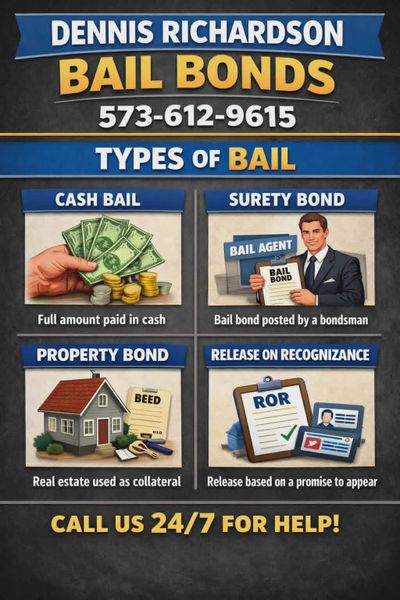
What it is: The entire cash bail amount is paid directly to the court in cash, or via cashier’s check or money order. How it works: If bail is set at $5,000, you pay the full amount of $5,000. The defendant is then released on their own recognizance or through a surety bond. If they attend all court dates, the court returns the money at the end of the case, minus any applicable fees.
What it is: A licensed bail bondsman posts the full bail on your behalf, whether it's cash bail or a property bond. How it works: You pay a non-refundable percentage (typically 10%). The bondsman guarantees the full bail to the court, which allows the defendant to be released quickly, sometimes even released on their own recognizance. This process can also involve a surety bond, depending on the circumstances.
What it is: Real estate can be utilized as collateral in place of cash bail. How it works: The property value must typically be equal to or greater than the bail amount. The court places a lien on the property, and if the defendant fails to appear, the property can be forfeited. Alternatively, one might be released on own recognizance or opt for a surety bond to ensure their appearance in court.
What it is: The defendant is released on their own recognizance, which means they do not need to pay cash bail based on trust. How it works: The judge releases the defendant on a promise to appear in court, typically for minor offenses or first-time offenders. In some cases, a property bond or surety bond may be required instead.
Dennis Richardson Bail Bonds
We use cookies to analyze website traffic and optimize your website experience. By accepting our use of cookies, your data will be aggregated with all other user data.